
Emotional Intelligence for Kids: 10 Neuroscience-Backed Strategies
By a Mom Who’s Seen It All
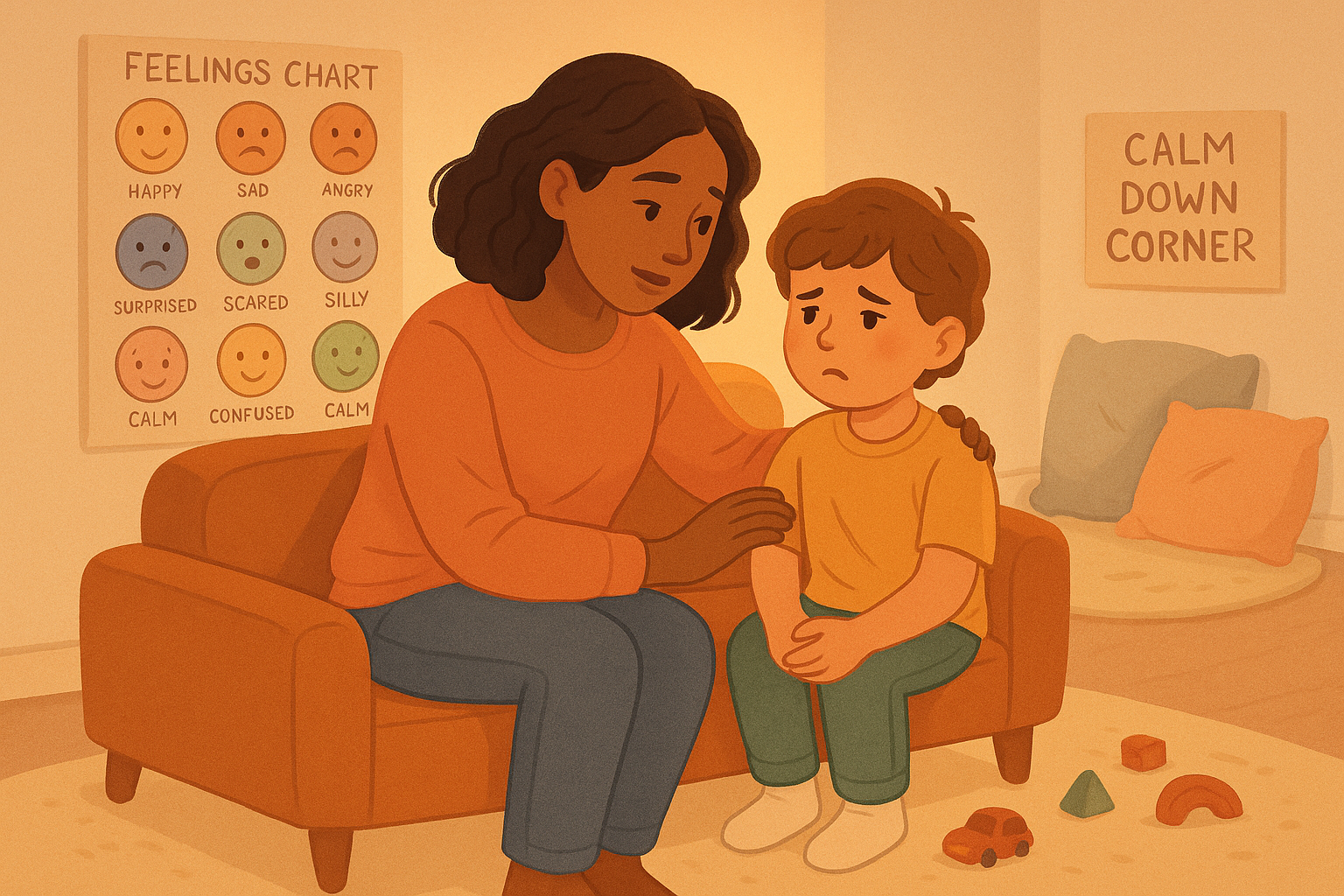
Let’s Be Real: What Even IS Emotional Intelligence?
Alright, let’s talk about something that sounds super serious but is actually the secret sauce to raising a decent human being: Emotional Intelligence (EQ). I know, I know, it sounds like something you’d need a PhD to understand, but stick with me. All it really means is being able to figure out your own feelings, handle them without setting the house on fire (literally or figuratively), and not being a complete robot when it comes to other people’s emotions.
We spend so much time drilling our kids on their ABCs and 123s, but what about their F-E-E-L-I-N-G-S? Turns out, that’s just as important. The brainy folks in white coats have done the research, and kids with a higher EQ don’t just have a better shot at not becoming tiny tyrants; they also do better in school, have more friends, and are less likely to have a complete meltdown when their favourite socks are in the wash.
So, if you’re tired of navigating emotional minefields and want to raise a kid who’s both smart and kind, you’re in the right place. The best part? You don’t need a fancy degree. You just need a little patience, a lot of love, and these ten ridiculously practical tips. Let’s do this.
1. Become a Feeling Detective (and Validate, Validate, Validate!)
Ever seen your kid go from zero to a full-blown tantrum over a broken crayon? Yeah, me too. In that moment, they’re not just being dramatic (okay, maybe a little). They’re genuinely overwhelmed by a feeling they can’t name. Your job, should you choose to accept it, is to become a feeling detective.
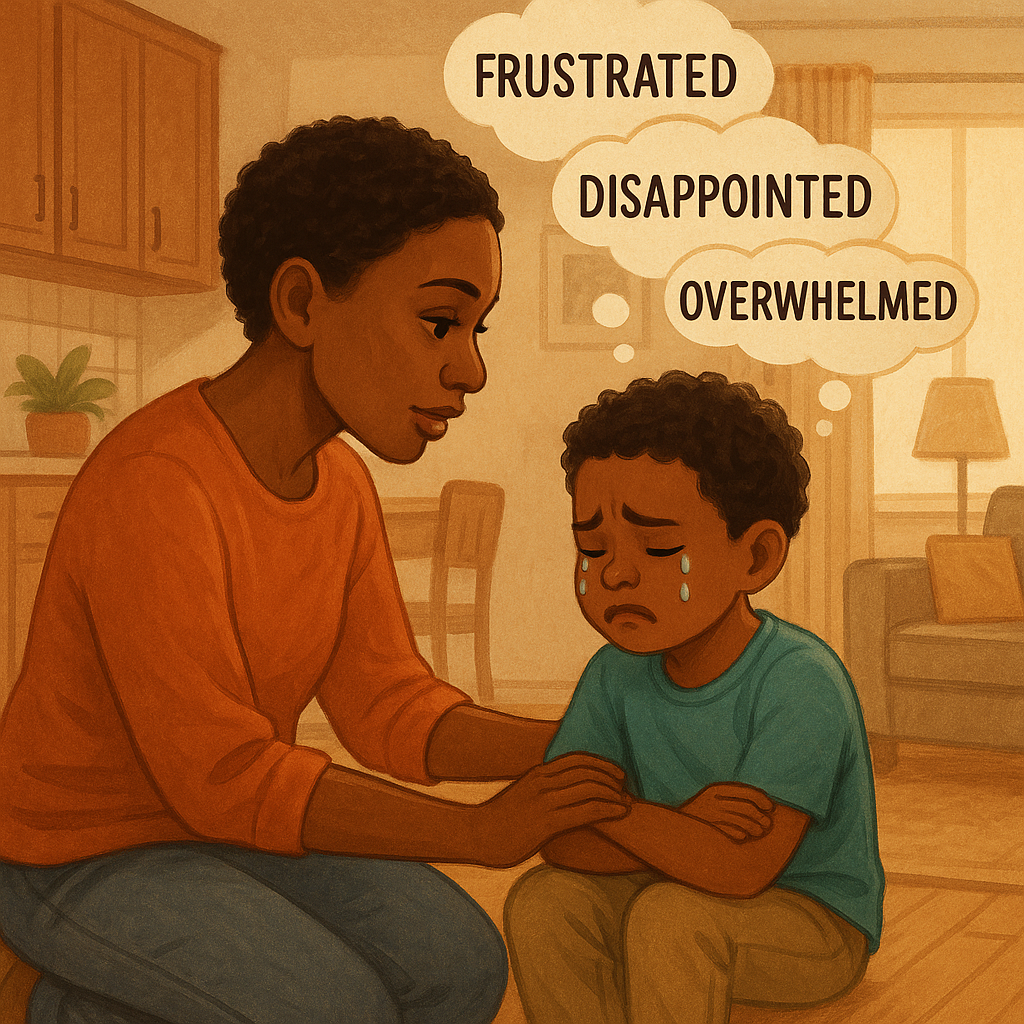
Instead of the classic “You’re fine!” or “Stop crying!” (which, let’s be honest, has a 0% success rate), try putting a name to the emotion. “Wow, you seem really frustrated that your crayon broke.” Or, “I can see you’re feeling disappointed that we have to leave the park.”
By labeling the emotion, you’re handing them a word for that big, scary feeling. It’s like giving them a map in the middle of a confusing forest. And when you follow it up with validation—”It’s okay to feel frustrated,” or “I’d be disappointed too”—you’re telling them their feelings are legitimate. You’re not saying the behavior (like throwing the broken crayon at your head) is okay, but the feeling is. This simple step builds a foundation of trust and teaches them that emotions aren’t something to be ashamed of. It’s a core part of what the experts call “emotion coaching,” and it’s basically magic.
2. Teach Empathy (aka, “How to Not Be a Self-Absorbed Gremlin”)
Empathy is the ability to understand and share the feelings of another. It’s the difference between a kid who laughs when a friend falls and a kid who asks, “Are you okay?” It’s a skill, and like any skill, it needs practice.
So, how do you teach it? Start by asking gentle, curiosity-driven questions. When your child tells you about a squabble with a friend, resist the urge to immediately jump in with solutions. Instead, ask, “Hmm, how do you think Maya felt when you said that?” or “What do you think was going on in his head when he took your toy?”
You can also turn everyday life into empathy training. Watching a movie? Pause and ask, “How do you think that character is feeling right now?” Reading a book? “Oh man, that dragon looks pretty sad. Why do you think he’s crying?” These little prompts encourage your child to step outside of their own world and consider someone else’s. It’s the first step to raising a kid who’s not just the main character in their own movie, but a compassionate supporting actor in the lives of others.
3. Model Your Own Emotions (The Good, The Bad, and The Grumpy)
Our kids are always watching us. Always. They see how we handle stress, how we express joy, and how we deal with anger. This is both terrifying and a huge opportunity. If you want your kids to handle their emotions in a healthy way, you have to show them how it’s done.
This doesn’t mean you have to be a Zen master 24/7. In fact, it’s better if you’re not. It’s about being honest and appropriate. Instead of bottling up your frustration and then suddenly exploding because someone left a wet towel on the bed again, try narrating your feelings. “I’m feeling really overwhelmed right now, so I’m going to take five minutes to sit by myself and take some deep breaths.” Or, “I’m feeling a little sad today, and that’s okay. I think a hug would make me feel better.”
When you do this, you’re teaching them a few crucial things: 1) Adults have feelings too. 2) It’s okay to not be okay. 3) There are healthy ways to cope with tough emotions that don’t involve yelling or throwing things. You’re giving them a real-life, in-person tutorial on emotional regulation, and that’s more powerful than any lecture you could ever give.
4. Become a Problem-Solving Partner
When your child is in the throes of a big emotion, their problem-solving brain basically shuts down. It’s all feelings, no logic. That’s where you come in. Instead of swooping in to fix everything, you can guide them to find their own solutions. This builds resilience and shows them they’re capable of handling their own problems.
Here’s a simple four-step process you can walk through together:
1.Identify the Problem: “Okay, so the problem is that you and your sister both want to play with the same toy.”
2.Brainstorm Solutions (No Bad Ideas!): “What are some things we could do? We could take turns, or could find another toy. We could even cut the toy in half.” (Okay, maybe veto that last one, but you get the idea). Let them be creative!
3.Evaluate the Options: “What might happen if we take turns? What about if we find another toy?”
4.Pick One and Try It: “Let’s try setting a timer for five minutes. If that doesn’t work, we can try something else.”
By doing this, you’re not just solving the immediate problem. You’re giving them a framework for life. You’re teaching them that when they feel stuck, they have the power to find a way out. And that, my friends, is a skill that will serve them long after the toy battles are over.
5. Expand Their “Feeling” Vocabulary
Most kids have a pretty basic emotional vocabulary: happy, sad, mad. But there’s a whole world of feelings out there! The more words they have, the more precisely they can understand and express what’s going on inside them.
Think of it like this: if the only colors you knew were red, yellow, and blue, the world would look pretty bland. But when you learn about turquoise, magenta, and chartreuse, everything becomes more vibrant. The same goes for emotions.
So, start sprinkling in some more sophisticated feeling words. Instead of just “sad,” try “disappointed,” “lonely,” or “left out.” Instead of “happy,” try “excited,” “proud,” or “grateful.” You can make it a game at the dinner table: “What was one time today you felt curious?” or “Tell me about a time you felt brave.” This simple habit can have a huge impact on their ability to understand themselves and others.
6. The Magical “Calm-Down Corner”
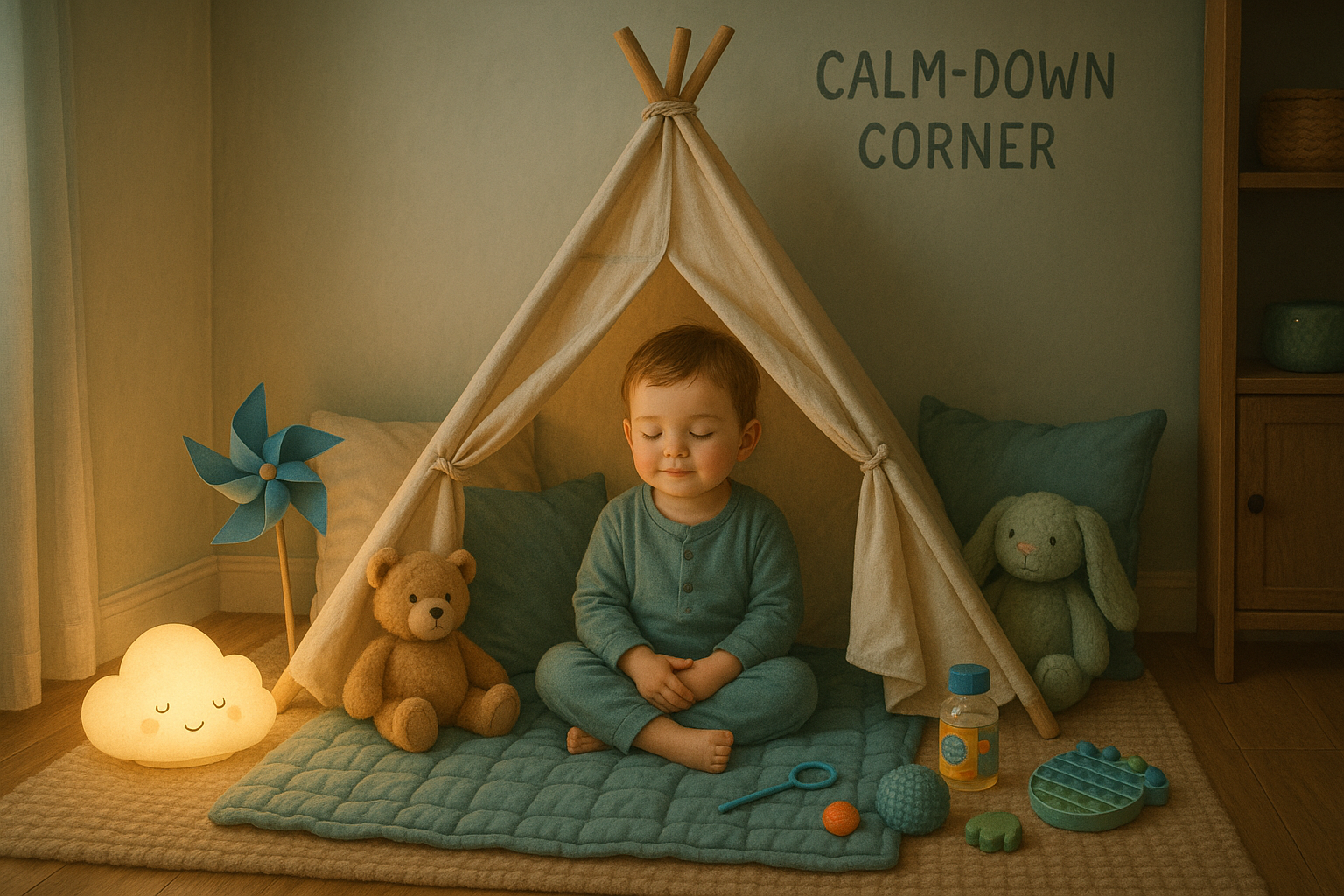
When a kid is overwhelmed, telling them to “calm down” is like telling a fish to climb a tree. It’s just not going to happen. What they need is a safe space to ride out the emotional storm. Enter the “calm-down corner.”
This is NOT a time-out. It’s not a punishment. It’s a cozy, comforting spot where your child can go to feel safe and regulate their body. It could be a corner of their room with a beanbag chair, a small tent in the living room, or even just a pile of pillows.
Stock it with calming tools: a soft blanket, a few favorite stuffed animals, a bottle of bubbles (great for deep breathing!), a pinwheel, or some sensory toys. When you see them starting to get overwhelmed, you can gently suggest, “It looks like you’re having a hard time. Would you like to go to your calm-down corner for a few minutes?”
Over time, they’ll start to take themselves there. They’ll learn to recognize their own internal warning signs and take proactive steps to manage their feelings. It’s a powerful tool for teaching self-regulation.
7. Story Time is Feeling Time
Books are one of the best tools we have for teaching kids about emotions. When they see a character on the page experiencing a feeling they recognize, it’s incredibly validating. It tells them, “Hey, I’m not the only one who feels this way!”
There are so many amazing books out there that deal with emotions. Some of our favorites are The Color Monster by Anna Llenas, When Sophie Gets Angry—Really, Really Angry… by Molly Bang, and My Mouth is a Volcano! by Julia Cook. These books open the door to conversations about feelings in a way that’s not preachy or intimidating.
After you read, ask some open-ended questions. “Have you ever felt as angry as Sophie?” “What do you do when you feel all your colors are mixed up like the Color Monster?” These conversations connect the story to their own life and help them process their own experiences.
8. The Art of Active Listening
In our busy lives, it’s easy to half-listen while we’re also making dinner, answering an email, and trying to remember if we paid the electric bill. But when our kids are trying to tell us something important (and to them, it’s all important), giving them our full, undivided attention is one of the most powerful ways to show them they matter.
Active listening means putting down your phone, turning away from the computer, and making eye contact. It means nodding along and making those little “uh-huh” and “hmm” sounds that show you’re engaged. And most importantly, it means reflecting back what you hear.
“So, it sounds like you were really hurt when your friend didn’t want to play with you at recess.”
When you do this, you’re not just being a human tape recorder. You’re showing them you understand. You’re validating their feelings and modeling what it looks like to be a good listener. And in a world where everyone is shouting, teaching our kids how to truly listen is a revolutionary act.
9. The Power of the Pen (or Crayon)
Sometimes, feelings are too big to talk about. That’s where journaling comes in. It gives kids a private, safe outlet to express themselves without fear of judgment. For younger kids, this might look like a “feeling journal” where they can draw pictures of how they’re feeling. You can even get some of those little emotion stickers to help them label their drawings.
For older kids, a written journal can be a game-changer. You can give them prompts to get them started, like:
•“Today I felt proud when…”
•“Something that’s been worrying me is…”
•“If I could tell my future self one thing, it would be…”
Journaling is a powerful tool for self-reflection and emotional processing. It helps kids untangle their thoughts and feelings and can be a healthy coping mechanism they can use for the rest of their lives.
10. Celebrate the Wins (Especially the Emotional Ones)
We’re great at celebrating the big, obvious achievements: the A on the report card, the winning goal, the lead in the school play. But what about the emotional victories? These are just as important, if not more so.
When you see your child handle a tough situation with grace, acknowledge it! “I noticed you took a deep breath instead of yelling when your tower fell over. That was amazing self-control!” Or, “It was so kind of you to share your snack with your friend when he was sad. You really showed a lot of empathy.”
This positive reinforcement does two things: it makes them feel seen and appreciated, and it encourages them to keep practicing these skills. It sends the message that their character is just as important as their accomplishments.
The Brain Science (in Plain English)
Okay, so why does all this stuff actually work? It’s not just fluffy parenting advice; it’s backed by actual brain science. Let me break it down for you in a way that doesn’t require a neuroscience degree.
Picture your child’s brain as a house under construction. The prefrontal cortex—that’s the part right behind their forehead—is like the wise, rational CEO of the brain. It’s in charge of executive functions like decision-making, impulse control, and thinking through consequences. You know, all those things we desperately want our kids to do when they’re about to launch their sandwich across the room.
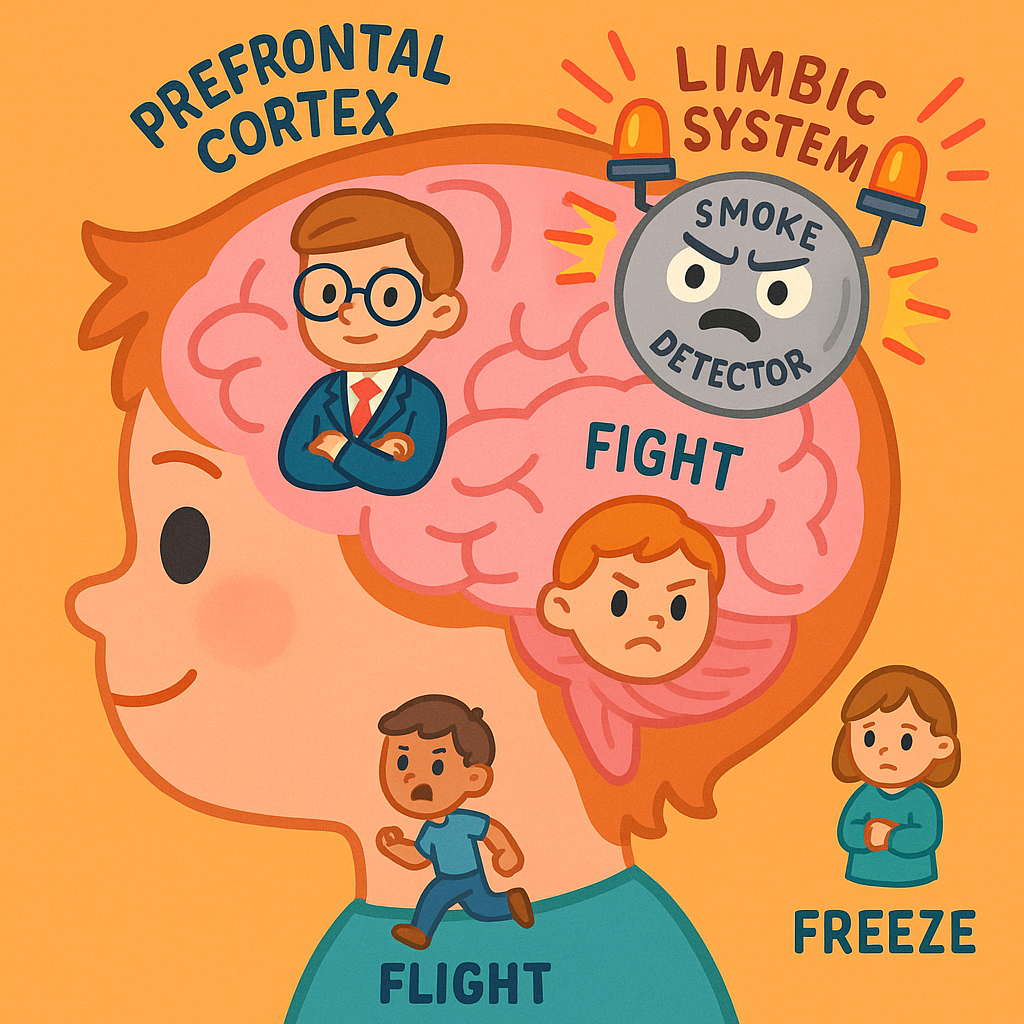
But here’s the thing: in kids, this CEO is basically an intern who just started last week. The prefrontal cortex doesn’t fully mature until around age 25 (which explains a LOT about teenagers, doesn’t it?). So while this rational part of the brain is still figuring things out, guess who’s running the show? The limbic system—the emotional, reactive part of the brain.
The limbic system includes the amygdala, which is basically your brain’s smoke detector. It’s constantly scanning for threats and danger, and when it spots something scary (like a broken toy, a friend who won’t share, or—heaven forbid—the wrong color cup), it hits the panic button and triggers the fight-or-flight response.
Now, this fight-or-flight response was super helpful when our ancestors needed to run from saber-toothed tigers. But it’s less helpful when your 4-year-old encounters a sandwich cut into triangles instead of squares. When that amygdala fires up, it floods the body with stress hormones like adrenaline and cortisol. Heart rate spikes, breathing gets shallow, muscles tense up, and rational thinking goes right out the window.
This is why you can’t reason with a child in the middle of a meltdown. Their thinking brain (prefrontal cortex) has literally gone offline, and their survival brain (limbic system) has taken over. They’re not being defiant or manipulative—they’re genuinely in a state of perceived danger, even if the “threat” is just having to put on shoes.
So what does fight-or-flight look like in kids? Fight might be hitting, kicking, screaming, or throwing things. Flight could be running away, hiding, or shutting down completely. Some kids also go into freeze mode, where they just stand there like a deer in headlights, unable to move or speak.
Here’s where all those emotion coaching strategies come in. When we do things like label emotions, validate feelings, and teach coping strategies, we’re helping to build and strengthen the neural pathways between the emotional brain and the thinking brain. We’re literally helping them build a bridge between the panicky amygdala and the wise prefrontal cortex.
Every time you help your child calm down from a big emotion, you’re training their brain to handle stress better. You’re teaching the amygdala that not everything is a five-alarm fire, and you’re giving the prefrontal cortex practice at stepping in to help solve problems.
Think of it like this: if the amygdala is a smoke detector that goes off every time you burn toast, emotion coaching is like teaching it the difference between actual smoke and just a slightly crispy piece of bread. Over time, with practice and patience, your child’s brain learns to respond rather than just react.
So, all those little moments of emotion coaching—the deep breaths, the feeling words, the calm-down corners—are actually contributing to your child’s healthy brain development. You’re not just helping them through today’s meltdown; you’re building their capacity to handle life’s challenges for years to come. How amazing is that?
The Takeaway
Raising an emotionally intelligent kid isn’t about being a perfect parent or having all the answers. It’s about being present, being patient, and being willing to learn alongside them. It’s about the small, everyday moments: the hug after a tough day, the conversation about a character in a book, the deep breath you take together when you’re both about to lose it.
These ten strategies are not a checklist to be perfected. They’re tools to have in your back pocket. Pick one or two that feel doable this week and give them a try. Be consistent, be compassionate (with your child and with yourself), and trust that you are giving your child a gift that will last a lifetime: the gift of emotional intelligence.